
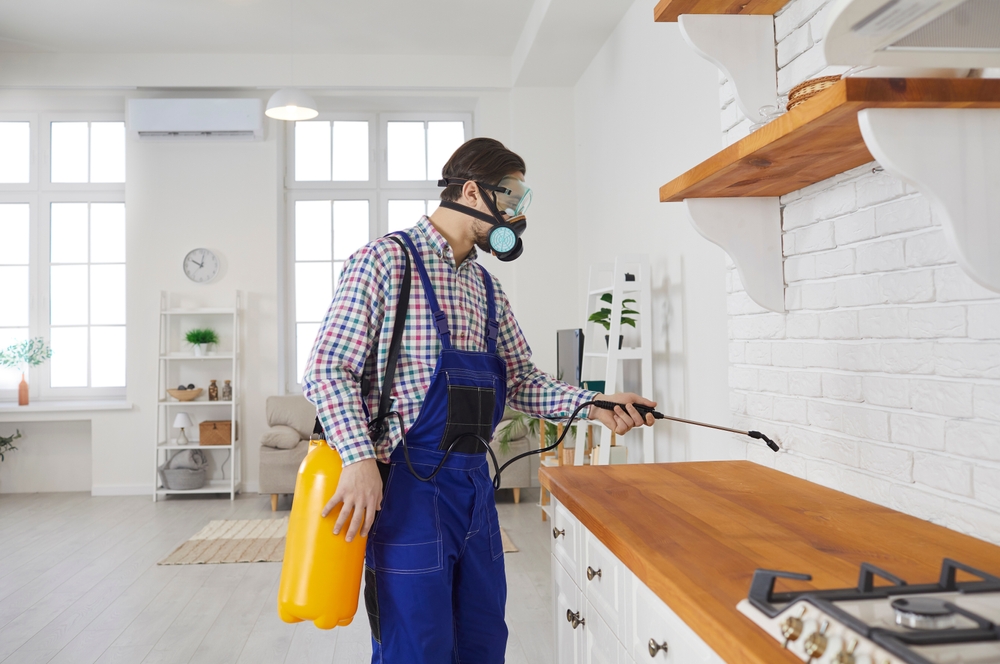
Waiting outside your home while the exterminators finish up inside creates a funny sense of both peace of mind and frustration. Peace of mind because the problem is finally being dealt with, but frustration at how long it’s taking-when, exactly, is it safe to come back inside?
That question is not as unique as you may think. When you call for professional pest control, you aren’t just seeking pest removal-you’re also hoping for safe, family-friendly interior conditions once the job is done. Any good pest control company has safety protocols and procedures in place to guarantee proper treatment and healthy air quality.
With companies like Quality Affordable Pest Control, the goal is the same: provide efficient pest control with maximum safety for home residents. However, balancing efficiency and safety can prove tricky. For pest treatments to be effective, products have to be strong enough to kill pests, but safe for human residents (including children and pets) after they’ve set in.
That’s where timing comes in. Entering your home too early could expose residents to lingering airborne particles or disrupt a protective barrier the treatment forms. While your technician will provide you with specific advice based on the treatments applied, there are general rules of thumb that will likely hold true for most homes. Following the proper waiting time makes sure that the treatment was successful and that residents can safely re-enter the house.
Standard Re-Entry Timelines
In most cases, professionals recommend that people should only return to a standardly treated area after between two and four hours. The application in liquid form needs to dry up thoroughly on the baseboards, floors, and carpets. When the products dry, the formulation bonds to the surfaces, making it difficult to transfer it by direct contact. If you have the flexibility, wait the full four hours to guarantee that the pest control safe environment is maintained. This is attributed to the evaporation rates of carriers used in modern pesticide formulations.
A standard treatment usually consists of targeted sprays that efficiently eliminate common household invaders. Being outside the house at this time prevents sympathy inhalation of suspended chemical particles. The exact timeframe always depends on the ventilation, ambient humidity, and applied formulas indoors. If, on re-entry, there is still a heavy chemical smell, one should immediately return outdoors until the toxic substances have sufficiently diluted. Modern low-odor products have turned this into a much more pleasant experience, but the absence of a scent cannot always be taken as a reliable indication of product dryness. If you require a reliable exterminator in Pickering, you must select a team that values air quality and safety.
Recommended Waiting Periods by Treatment Type
| Treatment Type | Recommended Vacancy | Primary Reason for Wait |
| Standard Perimeter Spray | 2–4 Hours | Drying time for liquid residuals |
| Ant or Roach Gel Baits | 0 Hours | No airborne particles; targeted placement |
| Flea / Tick Carpet Treatment | 4–6 Hours | Large surface area saturation |
| Bed Bug Heat/Chemical | 6–8 Hours | Intensive application and settling |
| Whole-Home Fumigation | 24–72 Hours | Complete dissipation of gas |
Factors Influencing Your Safe Re-Entry
Several variables are instrumental in determining how soon the home can safely be occupied again. This determines the amount of chemical products that would be required and their nature. These variables are evaluated by a technician from Quality Affordable Pest Control to provide the most accurate and safe time predictions. Heavy infestations require more applications of chemical products, and longer vacancy intervals are necessary to verify that the risk of exposure is negligible.
Pest Species and Specific Methods
Targeting house mice or Norway rats usually entails closed bait stations with no waiting period. However, the elimination of German cockroaches or fruit flies may necessitate the use of liquid residual sprays or aerosol flushing agents. Species directly determine chemical options, which in turn determine necessary absenteeism. And when exterminators deal with severe bed bugs, the waiting period is often significantly lengthened. Since the exterminators will have to deal with several surfaces, the products used will take a longer time to evaporate completely.
In many coastal or wooded areas, homeowners struggle with roof rats that nest in attics and wall voids. This is a primary focus for those seeking pest removal in Bradford, where structural entry points must be sealed. While baiting for these rodents is common, if a technician uses a tracking powder or a localized spray to deter them, you may need to stay clear of the attic access points. The method of application, whether it is a mist, a dust, or a liquid, is the primary driver of the safety timeline. Always clarify with your technician if they are using any “flushing agents” that might linger in the air longer than standard residuals.
How to Re-Enter Your Home Safely
Once the recommended time has passed, there are specific steps you should take to transition back into your living space. Quality Affordable Pest Control recommends a methodical approach to re-entry to maximize both safety and treatment efficacy.
- Ventilate the Space: Open windows immediately upon returning to clear any lingering odors and improve indoor air circulation.
- Inspect Treated Areas: Verify that all baseboards, carpets, and hard floors are completely dry before letting children or pets roam freely.
- Clean Cautiously: Avoid scrubbing the perimeter or mopping near baseboards to keep the chemical barriers functional.
- Wipe Food Surfaces: While floors should be left alone, it is a good idea to wipe down kitchen countertops where food preparation occurs.
Protecting Vulnerable Family Members and Pets
Following any professional application, children and pregnant women require extra safety considerations. Individuals with compromised immune systems or respiratory issues should wait longer than the standard recommendation. Taking these extra precautions makes certain that everyone remains safe from potential chemical exposure. A conservative approach always yields the best results for sensitive family members.
Animals possess sensitive respiratory systems and walk barefoot across floors throughout the entire day. If they walk on damp surfaces, they might ingest the product later while cleaning their paws. It’s essential to keep dogs and cats away until everything has evaporated entirely. Removing their food bowls and toys before the exterminator arrives also prevents accidental contamination. Quality Affordable Pest Control specializes in pet-friendly approaches that minimize risks to your furry friends.
Long-Term Maintenance and Prevention
Achieving a pest-free home requires more than just a single visit. Ongoing maintenance and preventative measures are the keys to long-term success. Homeowners should focus on reducing attractants such as standing water, unsealed food containers, and cluttered storage areas. By making your home less hospitable to pests, you reduce the frequency of intensive chemical treatments needed.
Regular inspections are also vital for catching potential problems before they become full-blown infestations. A quick check of the attic, crawlspace, and perimeter can reveal early signs of activity from deer mice or other rodents. Early intervention is always more cost-effective and less disruptive than reactive treatments that require long vacancy periods. By maintaining a consistent barrier on the outside, you significantly reduce the need for interior applications. Contact us today to schedule your consultation and make certain your home is protected using the highest safety and professional standards!