

This guide explains seasonal pest signs and prevention checks for Whitby homes. To book an inspection or request a treatment estimate, visit our Whitby pest control service page.
What shows up, when it shows up, and what actually works — from technicians who work Whitby homes year-round.
Whitby sits in a bit of a sweet spot for pests: close enough to Lake Ontario to get the moisture that carpenter ants love, with a mix of older neighbourhoods and newer subdivisions that each bring their own issues. If you’ve lived in Whitby for more than a season, there’s a good chance you’ve dealt with at least one of the pests below — or you’re about to.
This guide walks through the pests we see most often across Whitby, what draws them to a specific property, a season-by-season look at when to expect trouble, and where the line is between a weekend DIY job and a call to a licensed technician.
The Pests Whitby Homeowners Deal With Most
Carpenter Ants
Unlike the small ants that show up on a kitchen counter for a day and disappear, carpenter ants are a structural concern. They don’t eat wood the way termites do, but they tunnel through it to build nests, and they’re drawn to wood that’s already been softened by moisture — deck posts, window frames, and fascia boards near the roofline. Whitby’s lakeside humidity gives them more of this softened wood to work with than drier inland areas.
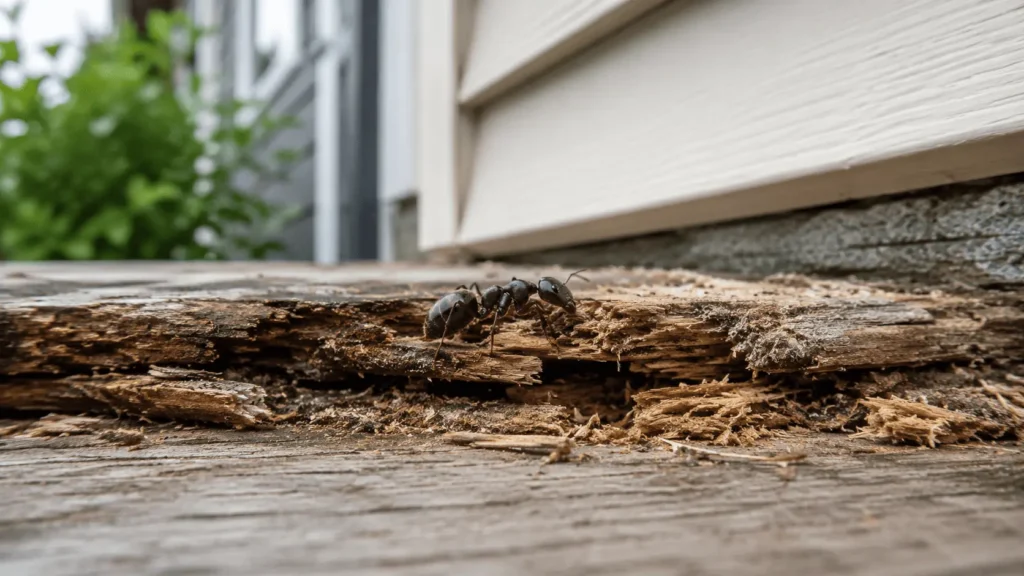
The giveaway sign is usually small piles of what looks like sawdust (called “frass”) near baseboards, window sills, or under a deck — that’s excavated wood, not food debris, and it means there’s an active nest nearby.
Mice and Rats
Activity picks up reliably every September and October as outdoor temperatures drop. Older homes in neighbourhoods like Downtown Whitby, with their original foundations and utility penetrations, tend to have more of the small gaps that mice and rats use to get inside. A gap the width of a pencil is enough for a mouse; rats need only a gap the size of a quarter.
Wasps and Hornets
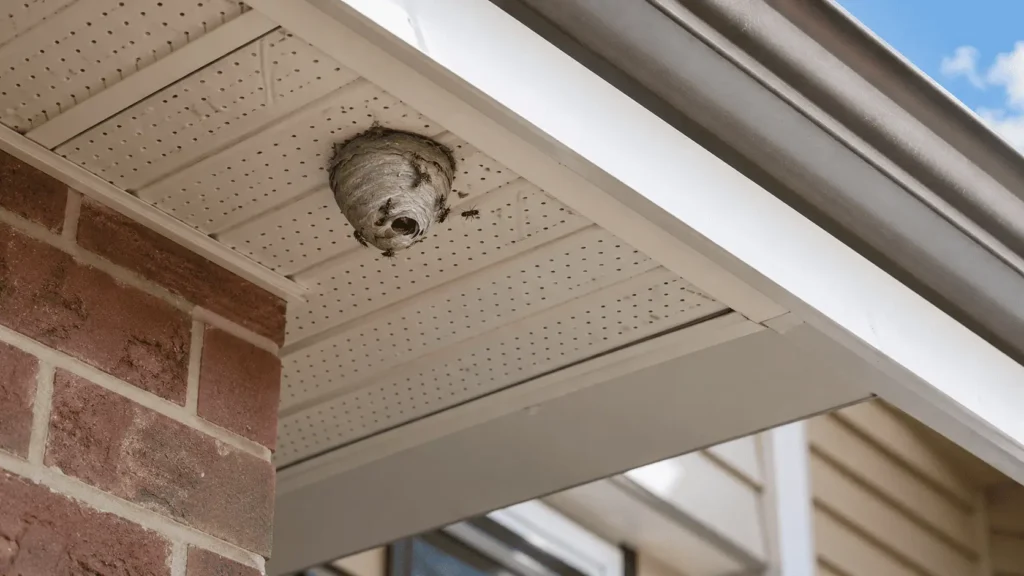
Sheds, eaves, and unused corners of the yard are common nesting spots through the summer. Nests are small and easy to miss in June, then suddenly obvious — and much harder to deal with safely — by August, when a colony can hold hundreds of wasps.
Spiders
Mostly a nuisance rather than a structural issue, but basements and window wells in Whitby homes see steady spider activity year-round, especially where other insects (their food source) are getting in.
A Season-by-Season Look at Whitby Pest Activity
| Season | What to Watch For |
|---|---|
| Spring | Carpenter ants become active again; early wasp queens scout nest sites |
| Summer | Wasp and hornet nests grow quickly; mosquitoes peak around standing water |
| Fall | Mice and rats move indoors seeking warmth; spiders become more visible |
| Winter | Rodents remain the primary concern indoors; most insect activity goes dormant |
What You Can Handle Yourself
- Sealing visible gaps around utility lines and foundation cracks before fall
- Trimming shrubs and tree branches back from the house to remove ant and wasp access points
- Keeping woodpiles and mulch away from the foundation
- Removing standing water that attracts mosquitoes and draws other pests looking for moisture
- Checking window screens and door sweeps for gaps before peak season
Local tip: Whitby’s older streets closer to the waterfront tend to see carpenter ant calls earlier in spring than inland subdivisions, simply because the ground stays damp longer. If you’re in one of these areas, an early-spring check around deck posts and fascia boards can catch a nest before it grows.
When It’s Worth Calling a Pro
Repeated ant trails, signs of rodents indoors or suspected carpenter ants in wood are reasons to arrange an inspection. For a wasp nest, location and access matter: activity near a doorway, balcony or shared path deserves professional assessment. Avoid disturbing an active nest or sealing an opening used by wildlife. Record where and when you notice activity, and let the technician identify the pest before deciding on treatment.

Quality Affordable Pest Control (Q.A.P Pest Control) provides local pest control in Whitby with same-day and next-day appointments. We also cover nearby Durham Region and York Region communities.
FAQ
Why does Whitby get more carpenter ants than other areas?
Whitby’s proximity to Lake Ontario means higher humidity in some neighbourhoods, and carpenter ants are drawn to wood that’s been softened by moisture, particularly around older decks, fascia boards, and window frames.
When do mice become a problem in Whitby homes?
Activity typically picks up in September and October as outdoor temperatures drop and mice look for a warmer place to nest for winter.
Do I need pest control every year, or only when there’s a problem?
Homes with a history of recurring pests, older construction, or nearby wooded or waterfront areas often benefit from an annual preventive inspection rather than waiting for an active infestation.
Are older Whitby neighbourhoods more prone to pests than new subdivisions?
Generally yes for rodents and ants, since older foundations and siding develop more small gaps over time. Newer subdivisions tend to see more landscaping-driven issues, like wasps nesting in freshly built sheds and fences.
What should I record before a pest inspection?
Note where you saw activity, when it started and whether it keeps returning. Photos taken from a safe distance, damaged packaging, chew marks and affected rooms can help explain the problem. Tell the technician about previous treatment and any activity in neighbouring units. Avoid disturbing nests or moving suspected bed bug items between rooms.
Serving Whitby and all of Durham Region. Call (647) 955-5549 for a free estimate. Get a free estimate or see our full coverage area.
Leave a Reply