
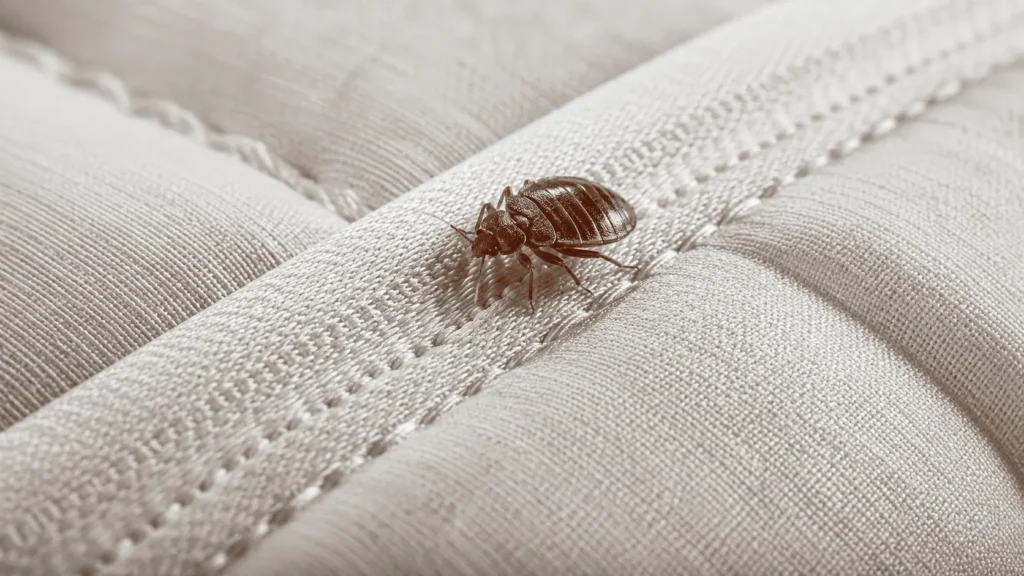
What actually works, what wastes time and money, and how to know when it’s time to call a professional.
Bed bugs are one of the few pests that cause genuine panic the moment they’re confirmed — and for good reason. They’re hard to see, they hide in places most people never think to check, and they don’t respond to the same store-bought sprays that handle ants or spiders. Understanding how to get rid of bed bugs starts with understanding why they’re so difficult in the first place: they’re built to hide, and they can survive months without feeding while they wait it out.
How Bed Bugs Actually Get Into a Home
Bed bugs don’t fly or jump, and they don’t come from a dirty house. They travel by hitchhiking — on used furniture, in luggage after a trip, in secondhand clothing, or on a guest’s bag left on the bed. This is why bed bugs show up just as often in well-kept homes and higher-end hotels as anywhere else. Once they’re in, they spread from room to room by following the same warmth and carbon dioxide signals that led them to a sleeping person in the first place.
Early Signs You Might Have Bed Bugs
- Small reddish-brown stains on sheets or mattress seams — evidence of crushed bugs or fecal spotting
- Tiny, pale, shed exoskeletons near mattress seams, box springs, or headboard joints
- Clusters of small, itchy bites, often in a line or cluster on exposed skin, appearing after a night’s sleep
- A faint, musty odour in a heavily infested room, sometimes described as sweet or sickly
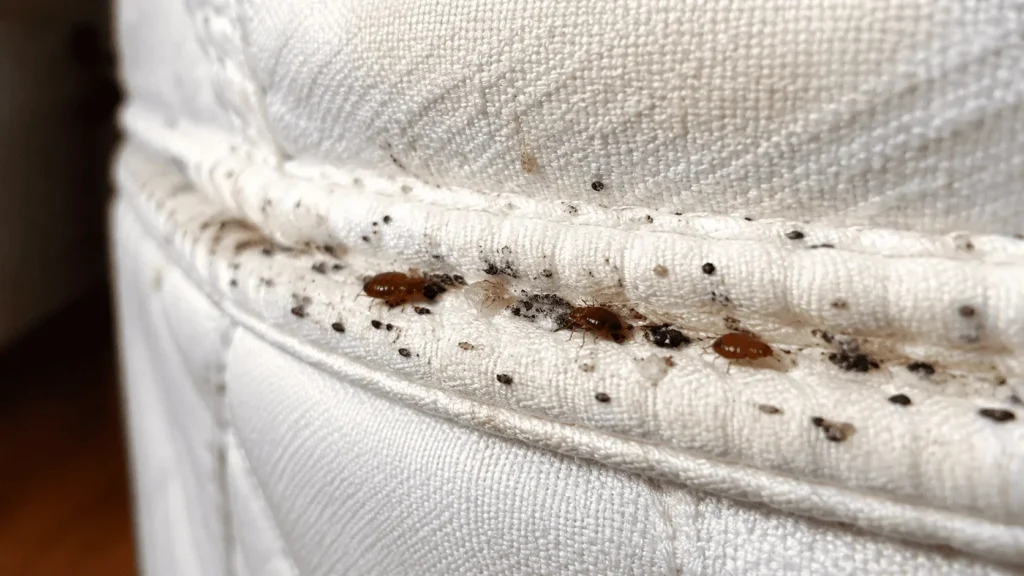
Bites alone aren’t reliable confirmation — plenty of people don’t react to them at all, and reactions can look like other insect bites or skin irritation. A physical inspection of seams, folds, and cracks near the bed is the only way to confirm an active infestation.
Where to Actually Look
Bed bugs favour thin, tight spaces close to where a person sleeps. That means checking well beyond the mattress itself:
| Location | Why They Hide There |
|---|---|
| Mattress and box spring seams | Closest access to a sleeping host, tight folds to hide in |
| Headboard joints and screw holes | Dark, undisturbed cracks near the bed |
| Baseboards and outlet covers | Allows movement between rooms along walls |
| Nightstand and dresser drawer joints | Close to the bed, rarely disturbed |
What Actually Works
Heat Treatment
Bed bugs and their eggs die at sustained temperatures above roughly 45°C (113°F). Professional heat treatments raise an entire room to a lethal temperature for several hours, which reaches bugs hiding deep in cracks that a spray never touches.
Targeted Insecticide Application
Licensed technicians use products and application methods that aren’t available over the counter, applied directly into cracks, seams, and voids where bed bugs hide rather than a general surface spray.
Thorough Laundering
Washing and drying bedding, curtains, and clothing on the highest heat setting the fabric allows kills bed bugs and eggs in fabric — a useful supporting step alongside professional treatment, not a replacement for it.
Why DIY sprays usually fail: Store-bought sprays kill bed bugs on contact, but bed bugs spend most of their time hidden deep in seams and cracks the spray never reaches. A treatment that doesn’t get every hiding spot leaves enough bugs (and eggs) behind for the population to rebound within weeks.
What Doesn’t Work (and Wastes Time)
- Throwing out the mattress without treating the rest of the room — bed bugs are rarely confined to just the mattress, so they migrate to the new one
- Bug bombs / foggers — they don’t penetrate cracks and seams, and can actually scatter bed bugs into other rooms
- Essential oils and “natural” repellents — no reliable evidence they eliminate an active infestation
- Moving to a different room in the same house — bed bugs will follow the carbon dioxide and warmth signals to find a host again
When to Call a Professional
If bites are recurring, you’ve found live bugs or shed skins in more than one spot, or a first round of cleaning hasn’t stopped the problem, it’s time for a professional inspection. Bed bugs are one of the pests where waiting almost always makes the job bigger — a single fertilized female can start a new population, and an infestation confined to one room can spread to adjacent rooms or units within weeks.
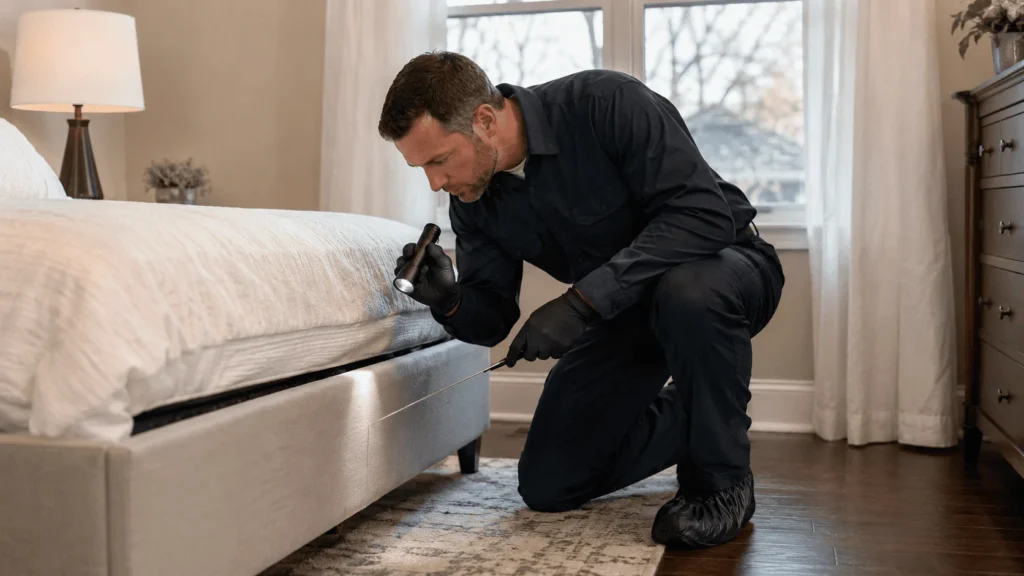
Bed bugs don’t go away on their own, and every week of delay gives them more time to spread. Quality Affordable Pest Control offers licensed bed bug removal with same-day and next-day appointments across the GTA, including Toronto, Durham Region, and York Region.
FAQ
How do you get bed bugs in the first place?
Bed bugs almost always travel in on something — used furniture, luggage after travel, or secondhand clothing. They don’t fly or jump, so they need to hitch a ride on an object or a person to reach a new home.
Can I get rid of bed bugs myself?
Minor, very early infestations caught in a single spot are sometimes manageable with heat treatment and thorough cleaning, but bed bugs hide deep in cracks and seams that store-bought sprays rarely reach, which is why most infestations return after DIY treatment.
How long does professional bed bug treatment take?
Most treatment plans involve an initial visit and at least one follow-up two to three weeks later, since bed bug eggs can survive the first treatment and need a second visit to eliminate newly hatched bugs.
Do bed bugs mean a home is dirty?
No. Bed bugs are drawn to warmth and carbon dioxide, not dirt or food debris, so they show up in clean homes and hotels just as often as anywhere else.
Serving Whitby, Durham Region, York Region, and across the GTA. Get a free estimate or see our full coverage area.
Leave a Reply