
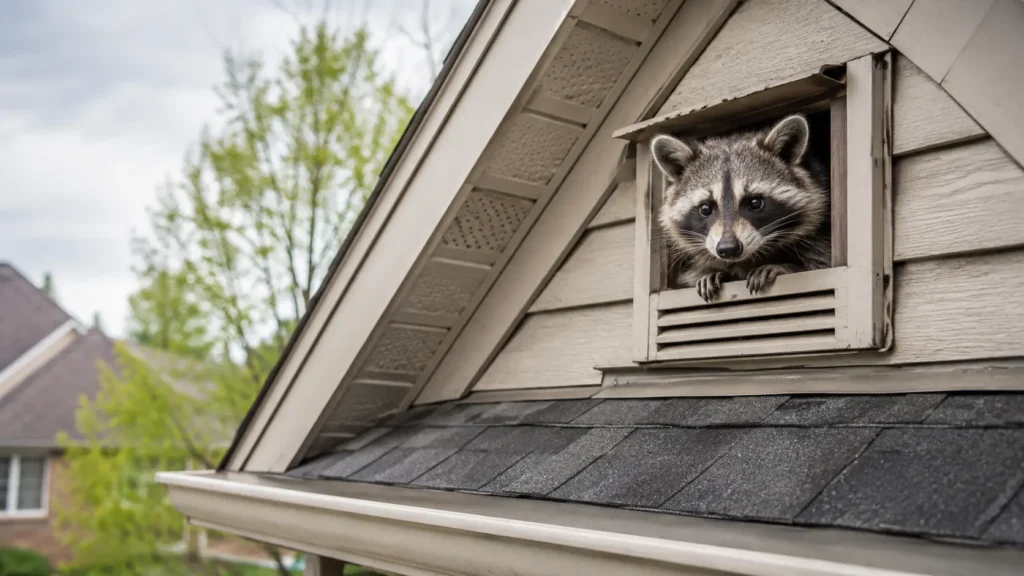
How to confirm what you’re hearing, why DIY removal is riskier than it looks, and what humane removal actually involves.
Heavy thumping overhead at night, scratching in the walls, or a strange chirping sound coming from the ceiling — for a lot of Ontario homeowners, this is how a raccoon problem first announces itself. Unlike smaller pests that can hide for weeks, raccoons in an attic are usually impossible to ignore for long, and they’re also one of the few pest situations where handling it yourself carries real risk to your own safety, not just an inconvenience if it goes wrong.
How to Tell It’s Raccoons (and Not Something Else)
| Sound or Sign | Likely Cause |
|---|---|
| Heavy thumping or rolling sounds, mostly at dusk and night | Raccoon — they’re large and nocturnal, active mainly after dark |
| High-pitched chirping or chattering | Raccoon kits (babies), especially in spring |
| Light scratching, near-constant, day or night | Squirrels (active during the day) or mice (mostly at night) |
| Visible damage to soffits, vents, or roofline | Raccoon entry point — they’re strong enough to tear or pry openings wider |
Raccoons are significantly larger and heavier than squirrels, so the sounds they make tend to be noticeably more forceful — closer to a heavy footstep than a scurry.
Why You Shouldn’t Try to Handle This Yourself
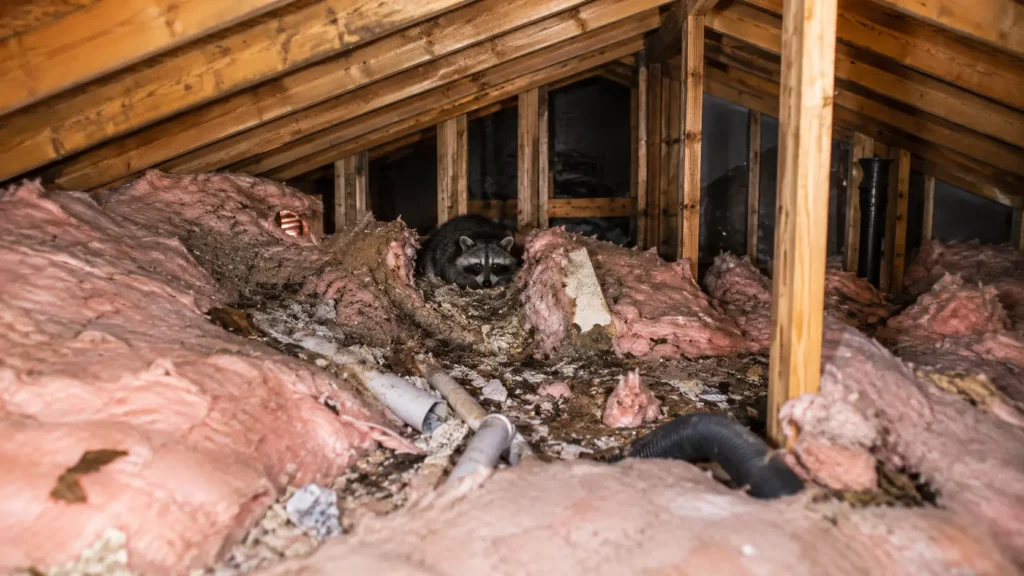
It’s tempting to seal the entry point as soon as you spot it, but that’s one of the most common mistakes homeowners make. If a raccoon (or worse, a litter of babies) is still inside when the opening is sealed, they’ll either cause significant new damage trying to claw their way back out, or they won’t get out at all — which creates a far worse problem, both for the animal and for the smell that follows.
There’s also a real health and safety angle. Raccoons can carry rabies and roundworm, and their droppings pose a genuine health hazard if disturbed without protective equipment. An adult raccoon that feels cornered, especially a mother protecting young, can also become aggressive.
Why professionals check for babies first: Female raccoons frequently den in attics specifically to raise a litter. A proper removal always starts with confirming whether kits are present, since removing the mother without locating her babies leaves them to die inside the attic — creating an odour and pest problem that’s far more difficult to resolve than the original issue.
What Humane Raccoon Removal Actually Involves
- Inspection — locating the entry point and confirming whether a litter is present, not just the adult
- Safe removal — using humane, one-way exclusion devices or hand removal for a den with young, done in a way that keeps the family together during relocation
- Cleanup — removing contaminated insulation and droppings, since raccoon waste is a genuine biohazard
- Exclusion and repair — permanently sealing the entry point once the attic is confirmed empty, so the same den site can’t be reused
Preventing Raccoons From Coming Back
- Secure garbage and compost bins with locking lids — an easy food source is one of the biggest draws
- Trim tree branches that overhang the roofline, which raccoons use as a bridge onto the house
- Install chimney caps and vent covers to block common entry points
- Repair any soft or damaged soffit and fascia promptly, before it becomes an easy opening
When to Call a Professional
Any confirmed raccoon activity in an attic, chimney, or crawlspace is a same-day call, not a wait-and-see situation. The longer raccoons stay, the more insulation and wiring damage accumulates, and if a litter is involved, timing matters even more.
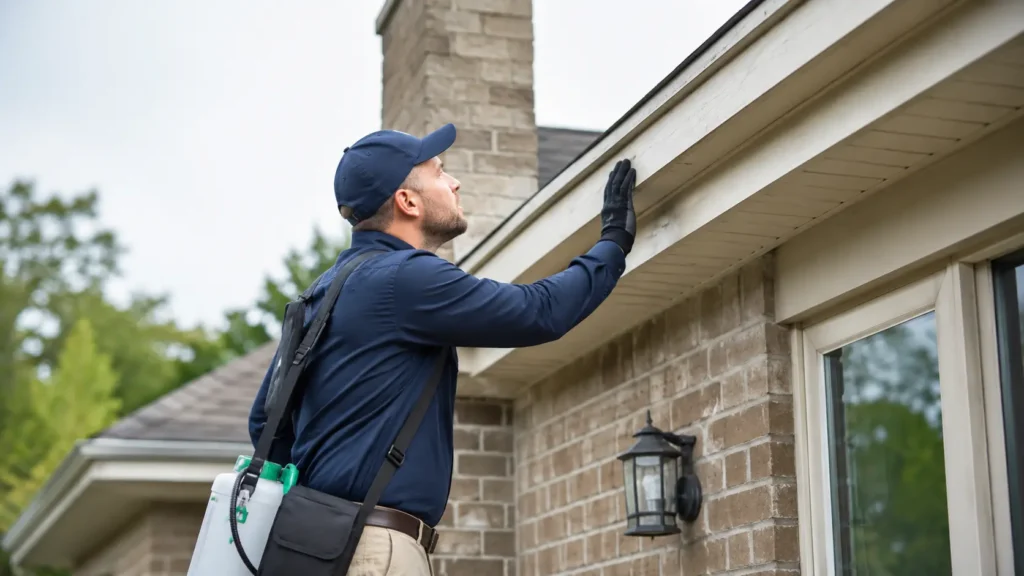
Quality Affordable Pest Control provides humane raccoon removal services across the GTA, including North York, Toronto, and Bowmanville.
FAQ
Can I remove a raccoon from my attic myself?
It’s not recommended. Raccoons can carry rabies and roundworm, are strong and can become aggressive if cornered, and if there are babies present, sealing the entry point without removing them first can trap and kill them, creating a worse problem.
What time of year are raccoons most likely to move into an attic?
Late winter through spring is peak season, when female raccoons look for a safe, warm place to give birth and raise young. Fall is a secondary peak as raccoons seek shelter for the coming winter.
Will raccoons come back after they’re removed?
Not if the entry point is properly sealed after removal. Raccoons are creatures of habit and will try to return to a den site that worked before, which is why exclusion work matters as much as the removal itself.
How do I know if there are baby raccoons in my attic?
Chirping or high-pitched sounds alongside the usual thumping and scratching are a strong sign of a litter, especially in spring. A professional inspection can confirm this before any sealing or removal begins.
Serving North York, Toronto, Bowmanville, and across the GTA. Get a free estimate or see our full coverage area.
Leave a Reply