
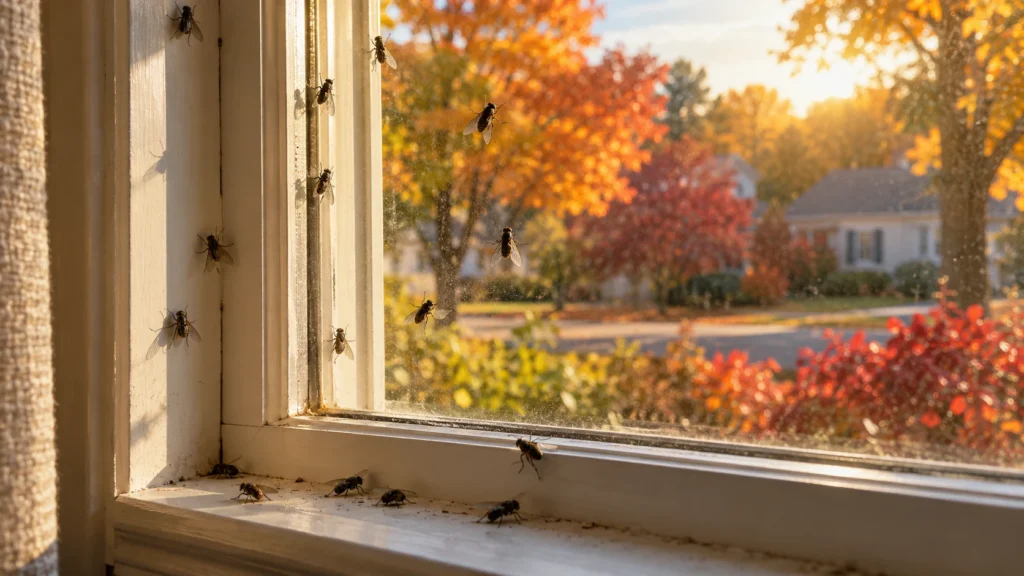
The slow, sluggish flies that show up by the dozens every autumn — and why they’re not what most people assume.
If you’ve ever noticed a cluster of slow, sluggish flies gathering on a sunny windowsill in September or October — seemingly out of nowhere, and in numbers that feel excessive for a random fly — there’s a good chance you’re dealing with cluster flies, not ordinary house flies. They’re one of the most misunderstood fall pests, mostly because people assume any indoor fly problem means poor sanitation, which isn’t the case here at all.
Why Cluster Flies Are Different From House Flies
| Trait | Cluster Flies | House Flies |
|---|---|---|
| Size and movement | Slightly larger, slow and sluggish | Smaller, quick and erratic |
| Wing position at rest | Overlapped | Held apart |
| What draws them | Sun-warmed exterior walls, then shelter to overwinter | Food waste, garbage, decaying matter |
| Health risk | None — don’t bite or spread disease | Can carry bacteria from waste and food sources |
This last point matters: unlike house flies, cluster flies aren’t a sign of a sanitation problem. Their life cycle actually depends on earthworms in the soil outside — the larvae develop as parasites inside earthworms before maturing into adult flies, which is part of why lawn size and soil conditions, not kitchen cleanliness, predict how many you’ll see.
Why They Show Up Every Fall
As temperatures drop in late summer and early fall, cluster flies instinctively search for a sheltered place to overwinter — wall voids, attics, closets, and other undisturbed indoor spaces. They’re strongly drawn to sunlight and warmth, which is why they cluster on south- and west-facing exterior walls before finding their way in through small gaps around windows, doors, and siding.
Why Some Homes Get More Than Others
Properties with large, open lawns or homes backing onto parks and open green space tend to see more cluster fly activity, simply because more lawn means more earthworm habitat for the larval stage. South- and west-facing exterior walls that get more direct afternoon sun are also a bigger draw, since adult flies gravitate toward warmth before heading indoors.
What You Can Do to Prevent Them
- Re-screen windows and doors with any holes or tears, and avoid leaving them open for long periods without a proper mesh barrier
- Seal cracks around baseboards, window frames, and electrical outlets — their entry points are often smaller than people expect
- Check and seal gaps around soffits and fascia, common access points into attic spaces
- Address active clusters early, before flies fully settle into wall voids for the season
Why DIY Fixes Only Go So Far
A shop vac or a fly swatter deals with the flies you can see, but does nothing about the ones already settled inside wall voids or attic spaces — and new flies can continue to emerge as the season goes on. If flies die inside a wall void in large numbers, they can also attract larder beetles, which feed on the dead flies and may spread to other areas of the home afterward.
When to Call a Pro
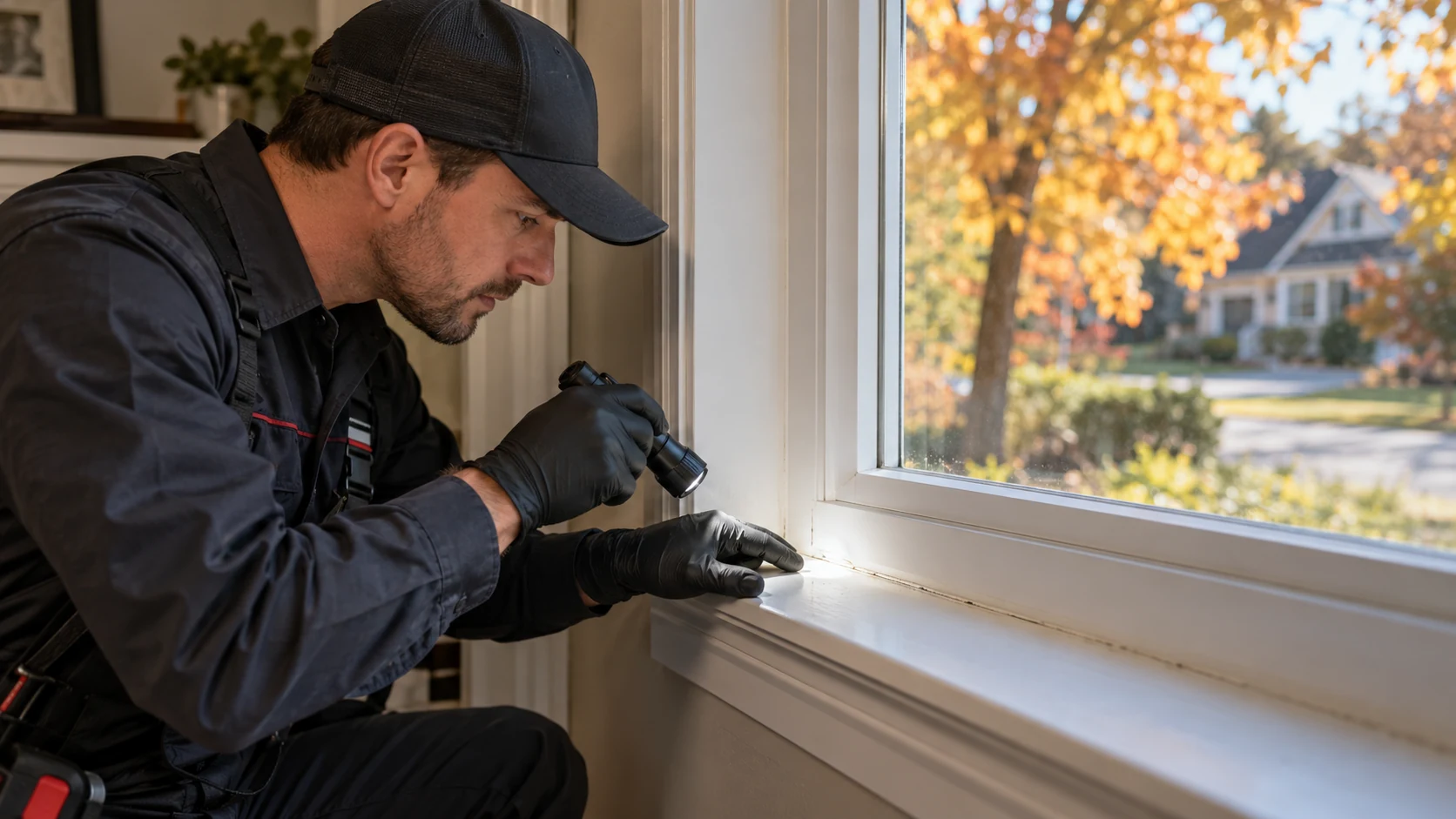
A handful of flies on one window is manageable on your own. Recurring clusters year after year, flies appearing in multiple rooms, or an infestation large enough to leave visible staining on walls and curtains are signs the population has an established foothold that’s worth addressing at the source.
Quality Affordable Pest Control offers effective fly control services across the GTA, including Whitby and Brooklin, Port Perry, and Oshawa.
FAQ
No — cluster flies don’t bite, don’t carry disease, and pose no direct health risk. They’re a nuisance pest, though people with asthma or breathing sensitivities may find large numbers bothersome, and their presence can attract secondary pests like larder beetles if they die in wall voids.
Cluster flies are slightly larger and move more sluggishly than house flies, overlap their wings at rest instead of holding them apart, and are often described as giving off a faint sweet odour, especially when disturbed.
Cluster flies overwinter in a dormant state inside wall voids and attics. Unseasonably warm days can trick them into waking early, causing them to emerge indoors thinking spring has arrived, even in the middle of winter.
Homes with large, open lawns and south- or west-facing walls exposed to more direct sunlight tend to attract more cluster flies, since the flies are drawn to sun-warmed exterior surfaces before heading indoors to overwinter.
Leave a Reply