
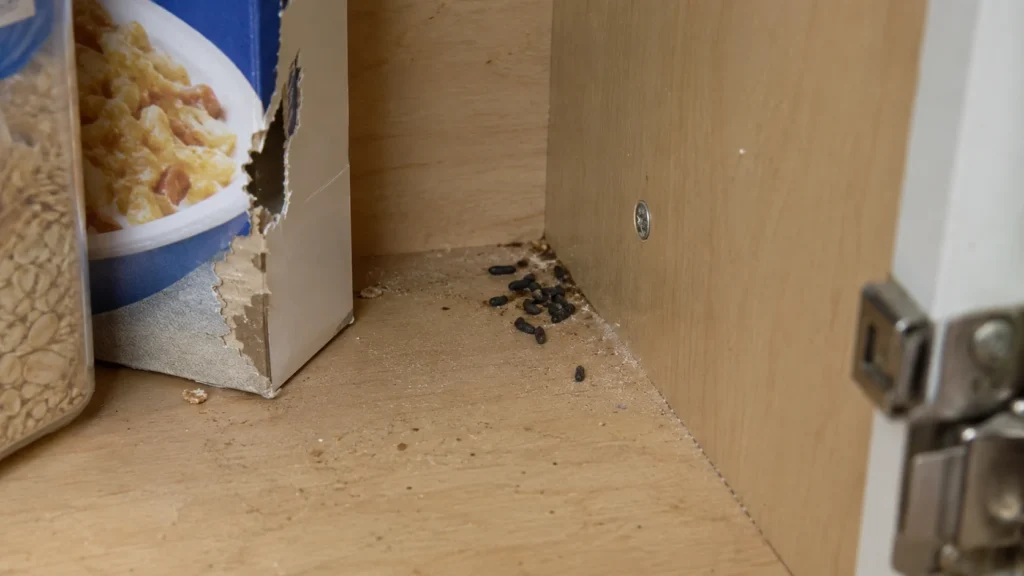
Beyond the property damage — the contamination and health risks that make a rodent problem more than just an inconvenience.
Most people think of a rodent problem in terms of property damage — chewed wiring, gnawed boxes, a hole in the drywall. That’s real, but it’s only part of the picture. Mice and rats also leave behind droppings, urine, and nesting material that carry genuine health risks, and the way you clean up after them matters just as much as getting rid of the rodents themselves.
How Rodents Actually Cause Health Problems
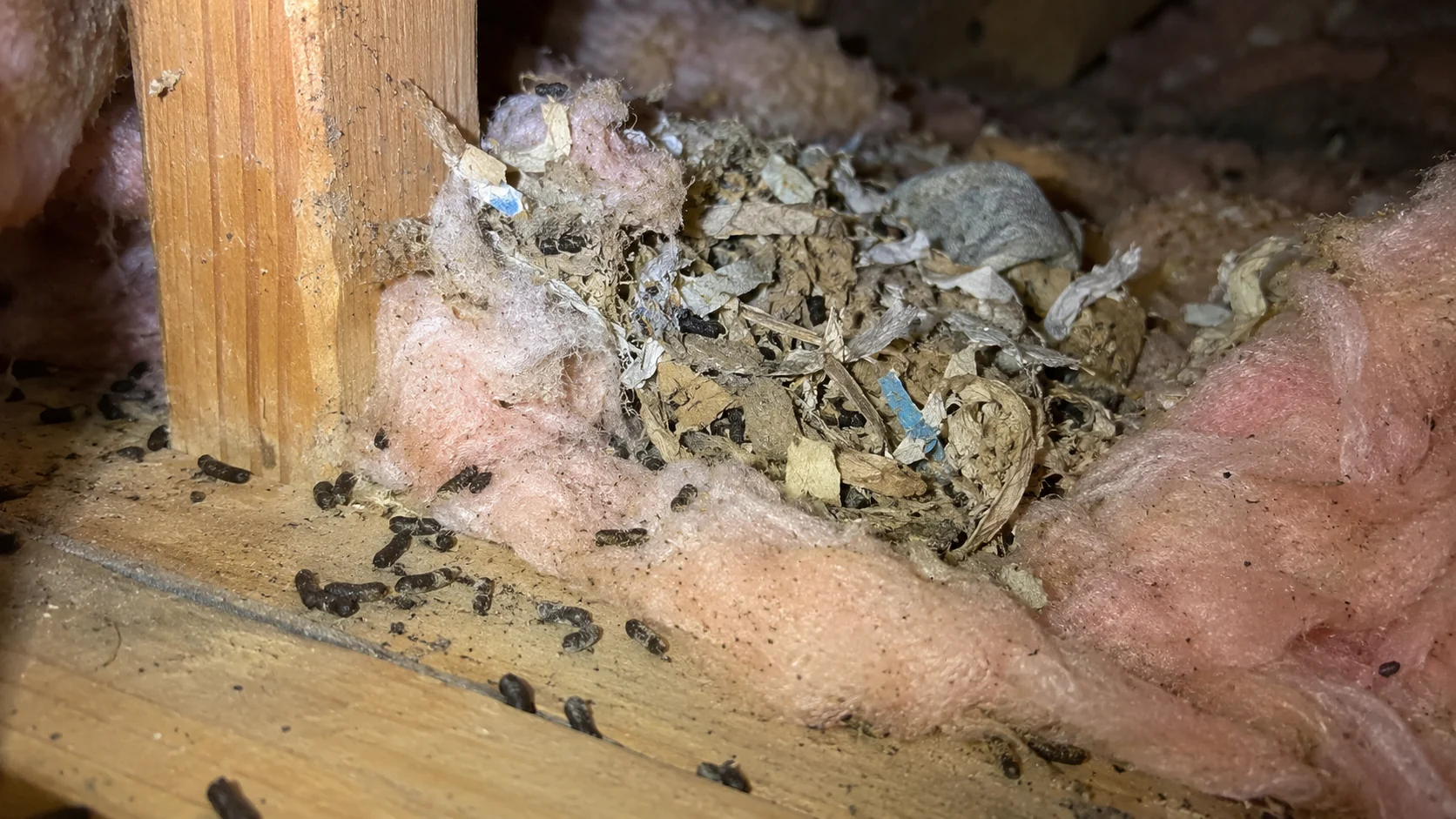
Rodents are nocturnal and instinctively avoid open, well-lit spaces, which means an infestation can go on for weeks in walls, attics, or storage areas before anyone notices. During that time, droppings and urine accumulate in places most people rarely check — behind appliances, inside wall voids, in insulation. Left undisturbed, this material dries out. The health risk comes when it’s disturbed: sweeping, vacuuming, or even just moving a box can release contaminated particles into the air.
What Hantavirus Actually Is
Hantavirus is carried by certain wild rodents, most notably deer mice. In humans, it can cause a rare but serious illness called Hantavirus Pulmonary Syndrome (HPS). It isn’t spread by rodent bites or direct contact — it’s spread by inhaling airborne particles from dried, contaminated droppings, urine, or nesting material, typically in a poorly ventilated space like a cabin, shed, or closed-up room.
Early Symptoms to Watch For
- Fever and fatigue
- Muscle aches
- Headache
- Nausea or general discomfort
In more severe cases, respiratory symptoms can follow — coughing, shortness of breath, chest tightness. Because early symptoms look like a common flu, mentioning recent exposure to a rodent-affected space to a doctor is an important detail that’s easy to leave out.
Upload an image and replace the path above before publishing.
Other Contamination Risks Beyond Hantavirus
- Food contamination — droppings, urine, and body hair can contaminate pantry items and food prep surfaces without a rodent ever being directly seen
- Ectoparasite spread — mice and rats can carry ticks, fleas, and mites into a home
- Surface contamination — countertops, storage bins, and stored items can carry residue even after visible droppings are cleaned up
- Fire risk — chewed electrical wiring is a well-documented cause of house fires, a property risk with a genuine safety dimension
How to Clean Up Rodent Droppings Safely
- Ventilate the area for about 30 minutes before starting — open windows and doors, and leave the space
- Put on gloves and a well-fitting mask before returning to clean
- Moisten droppings and nesting material with a disinfectant spray — never sweep or vacuum while dry
- Let the disinfectant sit for 5–15 minutes to fully saturate the material
- Wipe up with paper towel or a cloth, then disinfect the surface underneath
- Seal all waste in a bag before placing it in the garbage
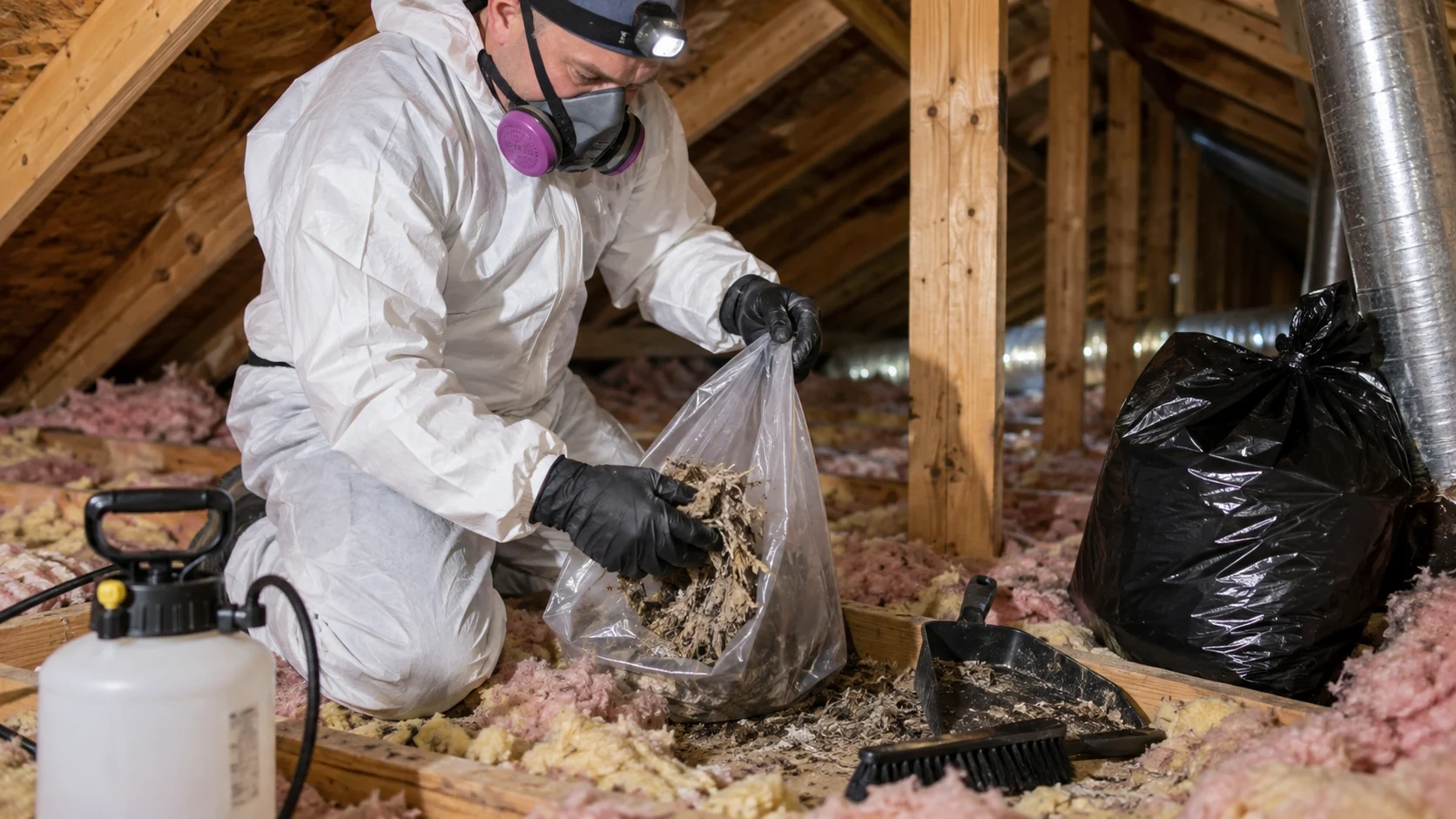
For larger or recurring contamination — multiple rooms, an attic, or a space that’s been sealed up for a long time — a professional cleanup is worth the cost over doing it piecemeal yourself.
Preventing the Problem at the Source
- Seal cracks, gaps, and entry points around the foundation and utility lines
- Store food and garbage in sealed, rodent-resistant containers
- Keep storage areas and basements decluttered so activity is easier to spot early
- Check attics, crawlspaces, and other low-traffic areas periodically rather than only after noticing a problem
When to Call a Professional
Droppings or nesting material in more than one area of the home, activity that continues despite DIY efforts, or finding a dead rodent somewhere hard to reach are all situations where professional help is worth it — both for effective removal and for making sure cleanup is handled safely rather than creating an airborne exposure risk in the process.
Upload an image and replace the path above before publishing.
Quality Affordable Pest Control provides mice removal and rat removal across the GTA, including Brampton, Mississauga, and Newmarket.
FAQ
It can be, if done incorrectly. Sweeping or vacuuming dry droppings can release contaminated particles into the air. The safe approach is to ventilate the area, wear gloves and a mask, moisten the material with disinfectant before cleaning, and dispose of waste in a sealed bag.
Hantavirus is carried by certain wild rodents, particularly deer mice. People are exposed by inhaling airborne particles from disturbed, contaminated droppings, urine, or nesting material — not through direct contact with a rodent itself.
Early symptoms resemble the flu — fever, fatigue, muscle aches, and headache. In more severe cases, respiratory symptoms like coughing and shortness of breath can develop. Anyone with these symptoms after exposure to a rodent-contaminated space should mention that exposure to a doctor.
Yes. Rodents can contaminate food, packaging, and prep surfaces through droppings, urine, saliva, and body hair without ever being seen directly, which is part of why a rodent problem is a health concern even when sightings are rare.
Leave a Reply