
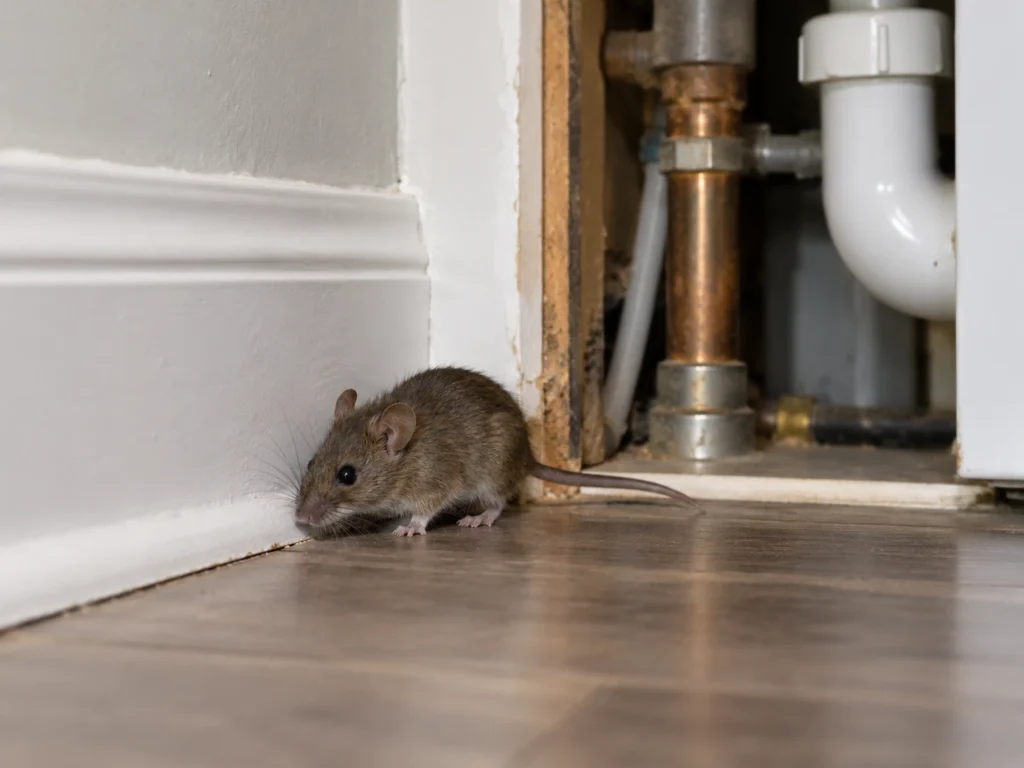
Chewed food packaging, droppings or scratching sounds can turn a quiet evening into a search for answers. Before buying traps or sealing every opening, establish what is happening and where. Mice and rats are not interchangeable, and noises alone do not identify the animal.
For a property-specific assessment, see Quality Affordable Pest Control’s pest control services in Cobourg. This guide helps you organize the evidence and ask the right questions about rodent control.
Signs worth recording
Health Canada lists gnawing, damaged food packages, droppings, tracks and nighttime scratching among possible signs of rodents. Rats are larger than mice, and identification affects the equipment and approach used. Small openings around buildings can provide access. These are reasons to inspect rather than guess. See Health Canada’s rats and mice guidance.
Make a simple room-by-room record. Note the date, location and type of evidence. Photograph accessible signs without disturbing them. Tell the technician whether you saw an animal, heard a sound or found damage; those are different kinds of evidence.
Avoid handling droppings or nesting material. Do not dry-sweep or vacuum rodent waste. Follow appropriate public-health cleanup guidance or ask about professional cleanup when contamination is extensive.
Why mice and rats need different assessments
Do not judge the size of a problem from a single sighting. Ask the technician what supports the identification and whether the evidence appears current. An inspection should clarify which areas need attention rather than treating every noise in a wall as a mouse infestation.
For a Cobourg home with a garage, basement or storage area, mention each affected space when booking. If the building has shared walls or several units, explain that too. Access arrangements and coordination with a property manager may need to be part of the discussion.
What to ask about rodent treatment
A useful conversation covers both current activity and prevention. Ask:
- What evidence identifies the rodent involved?
- Which areas need inspection or monitoring?
- What control methods are proposed, and why?
- How will equipment be placed with children and pets in mind?
- Which entry points need attention, and who will address them?
- How will the result be checked, and are return visits included?
Avoid assuming that a treatment quote also covers repairs or contaminated insulation. If structural damage is found, ask what specialist assessment or repair is recommended. Keep that work separate from the pest treatment unless the written scope explicitly includes it.
Reduce easy access to food and shelter
Store dry food and pet food securely, keep garbage containers closed and reduce unnecessary clutter around storage areas. Report leaks and damaged door seals. Health Canada recommends combining rodent-proofing with reducing available food, water and shelter. Prevention supports a control plan; it is not proof that an existing infestation has ended.
Do not place poison casually around the home. Any pesticide must be used according to its label. Discuss suitable control options and placement with the technician instead of combining treatments without advice.
Get help with mice or rats in Cobourg
When you contact Quality Affordable Pest Control through the Cobourg pest control page, share your observations and the areas involved. Ask for an inspection-led plan, clear preparation instructions and an explanation of how continuing activity should be reported.

Leave a Reply