
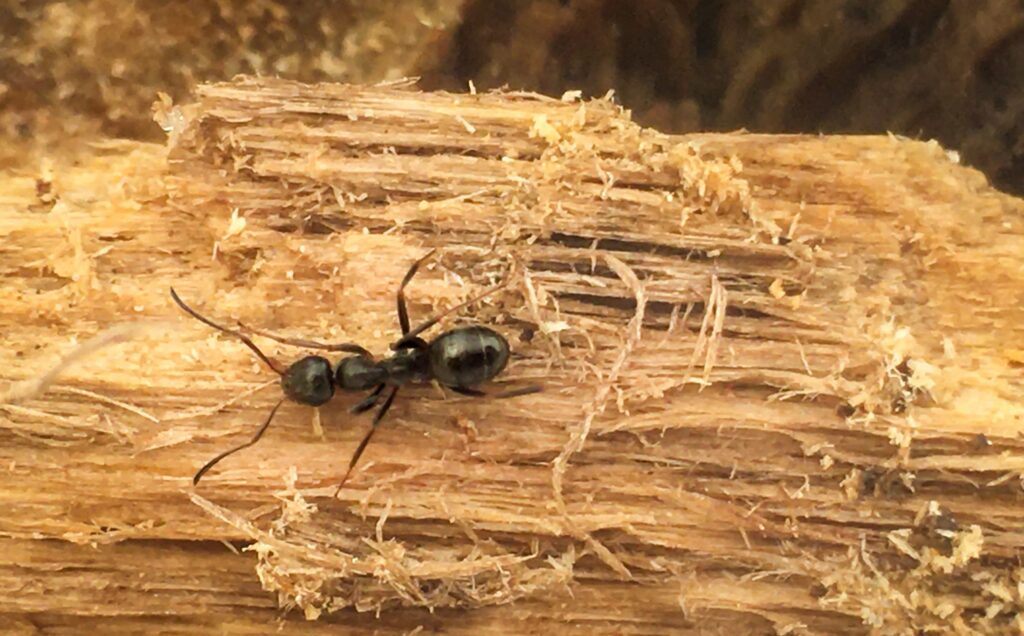
If you use firewood at an Uxbridge home, the route from the outdoor stack to the stove or fireplace deserves a quick check. Bringing in a large supply for convenience can also bring insects indoors. A few careful storage habits help you separate an insect carried on a log from a pest problem in the building.
This guide focuses on firewood handling and inspection. For activity in walls, cupboards or other areas of the home, see our Uxbridge pest control services.
Buy locally and check where the wood came from
The Canadian Food Inspection Agency’s firewood guidance explains that wood can carry hidden insects, eggs and fungal spores even when it looks clean. Buy and burn wood locally, ask where it was cut and check current movement restrictions before transporting it.
This matters when bringing leftover wood home from a cottage or camping trip, or buying a load advertised simply as local. Ask about the source instead of relying on the seller’s delivery address. Do not assume splitting or removing bark makes wood free of pests.
Keep the main stack outside and off the ground
Health Canada’s carpenter ant advice recommends keeping firewood outside and away from building sides. The City of Toronto’s tree-pest guidance also recommends storing firewood or lumber above ground. These practical steps make the stack easier to inspect and avoid placing it directly against the house.
- Choose a storage position where you can see the nearby wall, door and foundation.
- Keep the route to the stack clear so you can inspect logs without shifting a large unstable pile.
- Check for damp debris and visible pest activity around the base as you use the wood.
- Do not block vents, exits or equipment access with stored logs.
Inspect each small load before carrying it in
Bring in only the amount you expect to use soon. Look over the logs and carrying container outside. If you see insects, photograph them before deciding what they are. Do not spray firewood with insecticide and then burn it, and do not apply an unlabelled homemade treatment.
Keep the indoor holding area easy to clean and well clear of heat sources, following the appliance manufacturer’s fire-safety instructions. After the wood is used, check the empty carrier and remove loose bark and debris. This gives you a clearer view of any new activity.
A wandering ant does not establish a house infestation
An insect appearing beside recently delivered logs may have arrived with the wood. Persistent activity away from that area, repeated ants near damp trim, or new wood debris around the building deserves a separate assessment. Record where the insects appear and whether the activity continues when no new wood is being brought inside.
Moisture problems also need attention. Tell the inspector about leaks, soft wood or damp areas rather than covering them up. Pest treatment and building repairs have different purposes; ask what work the findings call for.
When to request help in Uxbridge
Contact Quality Affordable Pest Control if activity keeps returning inside, you cannot identify the insect, or you find signs of rodents around the home rather than only the wood stack. Our ant control service assesses the activity before recommending treatment. For rodents, we seal entry gaps where appropriate as part of the agreed work; where structural damage is involved, we recommend what to do rather than carrying out structural repairs.
Call (647) 502-3950 with photos and a short description of the affected area. Include when the wood arrived and whether the same signs occur elsewhere in the property.

Leave a Reply