
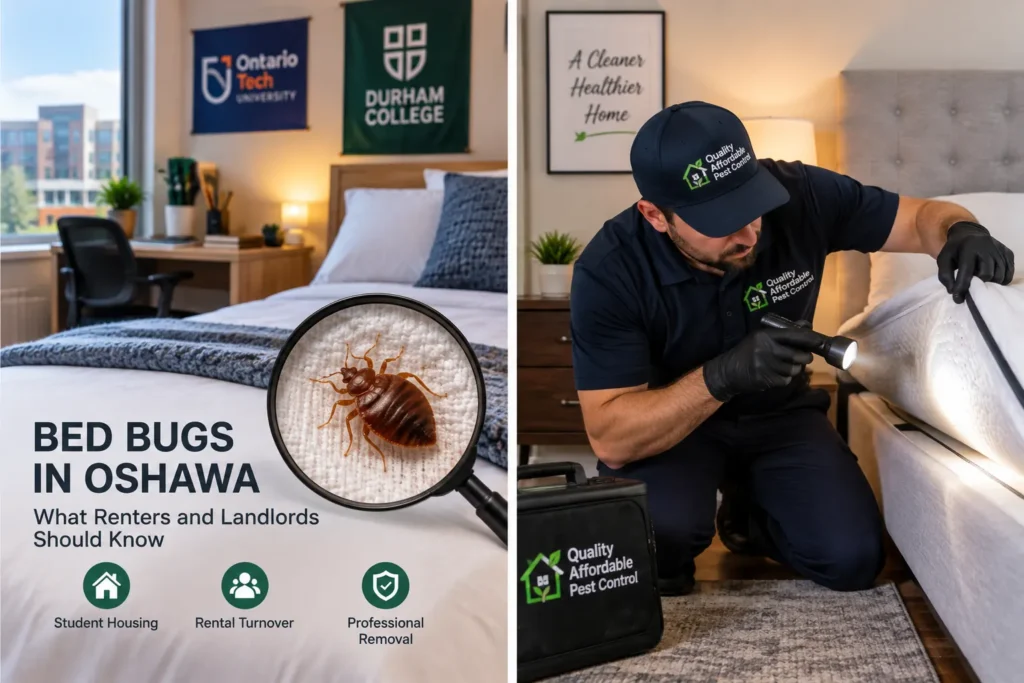
Student housing turnover near Ontario Tech and Durham College makes Oshawa’s rental market a genuine bed bug hotspot — here’s why, and what to do about it.
Every fall and spring, Oshawa’s rental market goes through the same cycle: students moving in and out around Ontario Tech University and Durham College, secondhand furniture changing hands, and a wave of move-in inspections that don’t always catch what’s hiding in a mattress seam. That turnover is exactly the kind of environment bed bugs take advantage of, which is part of why Oshawa’s student rental areas see more bed bug activity than the city’s average.
Why Student Housing Is Particularly Vulnerable
Bed bugs don’t fly or jump — they travel by hitchhiking on furniture, luggage, and clothing. Student rentals check a lot of the boxes that make this easy: secondhand furniture picked up cheap for a first apartment, luggage moved in from a dorm or a previous rental, and high turnover that means a new tenant may be moving into a unit that had an undetected problem left behind by the last one.
Multi-Unit Buildings: Why One Unit’s Problem Rarely Stays Contained
Bed bugs travel through shared walls, electrical outlets, and hallways without needing to go outside. In an apartment building or a house converted into multiple rental units — common in areas near both campuses — a bed bug problem reported in one unit is often already present in the units next to it, whether or not those tenants have noticed yet. This is why single-unit treatment in a shared building frequently doesn’t solve the problem long-term.
Who’s Responsible: A Quick Overview for Oshawa Renters and Landlords
In Ontario, landlords are generally responsible for maintaining rental units in a habitable condition, which includes addressing bed bug infestations — particularly when the source is a shared wall or common area rather than something a specific tenant caused. For landlords managing student rentals specifically, this often means budgeting for more frequent inspections given the higher turnover, rather than waiting for a tenant complaint.
What Students Can Do Before Moving In
- Inspect any secondhand furniture before bringing it into a new unit, especially mattresses and upholstered pieces
- Check the mattress seams and headboard joints in a new rental before unpacking anything
- Avoid placing luggage directly on the bed right after moving in, especially if it’s been in storage or recently used for travel
- Ask about the unit’s pest history if possible — a landlord or property manager should be able to disclose recent treatment records
What Landlords Can Do to Reduce Turnover-Related Risk
- Schedule inspections between tenancies, not just when a complaint comes in
- Keep documentation of treatment and inspection history for each unit
- Respond promptly to any report and inspect adjoining units at the same time
- Consider a scheduled inspection program for buildings with consistently high turnover, like those near both campuses
When to Call a Professional
Recurring bites, visible shed skins or staining on a mattress, or a report from a neighbouring unit are all signs it’s time for a proper inspection rather than DIY treatment. In shared buildings especially, professional treatment coordinated across affected units is far more effective than a single tenant handling it alone.
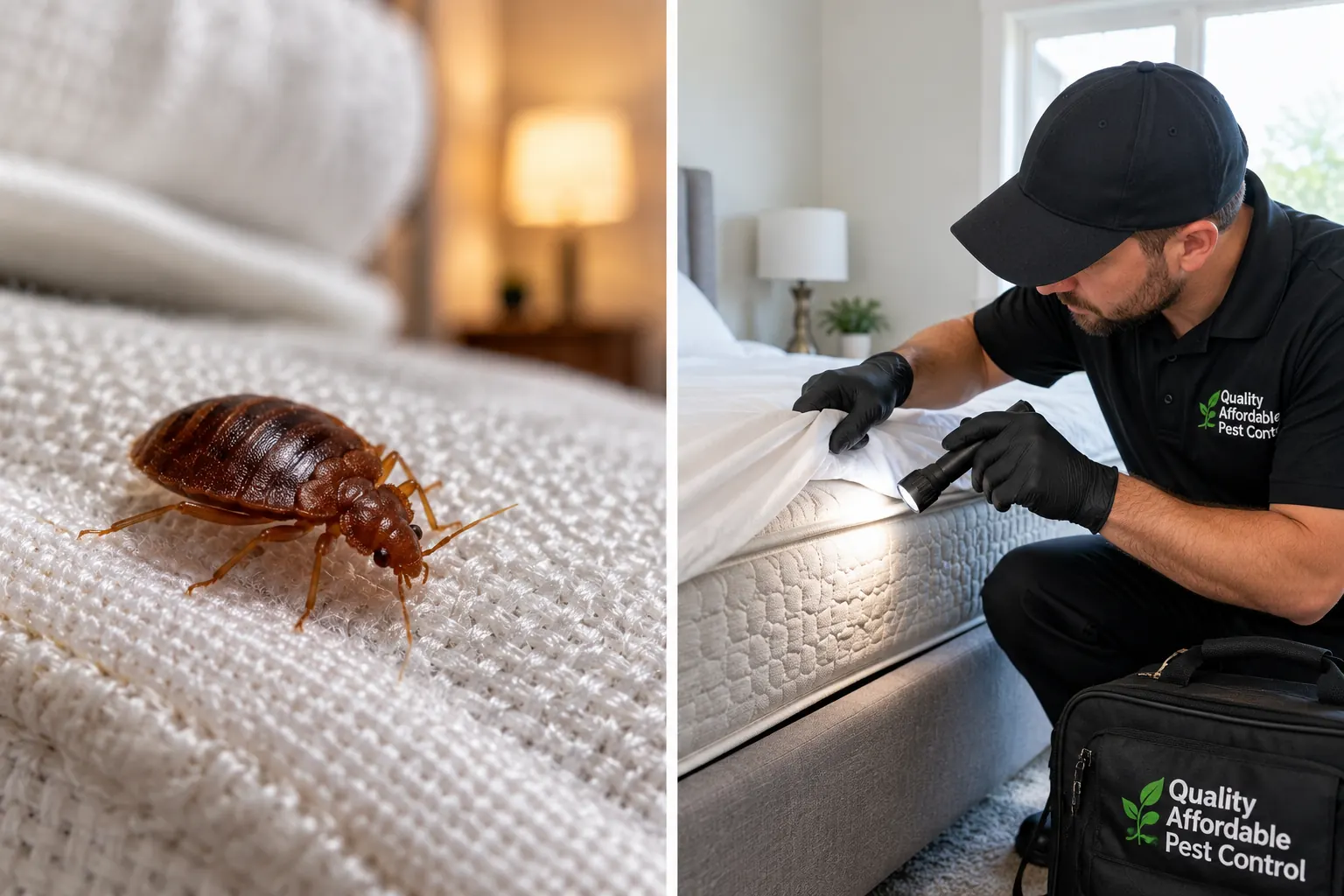
Quality Affordable Pest Control offers licensed bed bug removal across Oshawa, with experience in both single-family homes and multi-unit rental buildings. Learn more about our pest control services in Oshawa, or see our coverage for nearby Whitby and Clarington.
Frequently Asked Questions
Student rental housing near the campuses tends to have higher tenant turnover than the average home, and bed bugs travel easily in secondhand furniture and moving boxes, both common during student move-in and move-out periods each fall and spring.
In Ontario, landlords are generally responsible for maintaining rental units in a habitable condition, which includes addressing bed bug infestations, particularly when the pest is spreading from a shared wall or another unit rather than caused by a specific tenant.
Yes. Bed bugs travel through shared walls, hallways, and electrical outlets, which is why a single-unit treatment in a multi-unit building often fails unless adjoining units are inspected and treated at the same time.
Inspect secondhand furniture carefully before bringing it in, check mattress seams and headboard joints in a new unit before unpacking, and avoid storing luggage directly on the bed after moving, especially if it was recently used for travel or dorm move-out.
Leave a Reply