
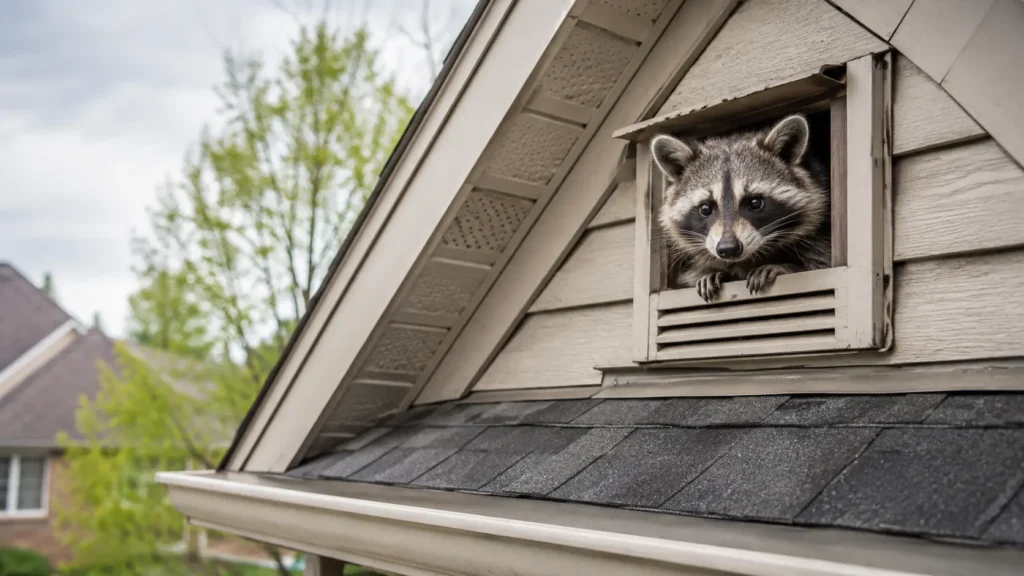
Hearing something moving above your ceiling is unsettling. The good news is the type of sound and the time of day can help narrow down what it is.
Quick Answer
Heavy thumping or walking at night is usually a raccoon. Fast scurrying, rolling or scratching in the early morning and late afternoon is usually a squirrel. Light, quiet scratching at night, often in walls too, is usually mice. Fluttering and chirping in the daytime, often near a vent, is usually birds. Whatever it is, don’t seal the entry hole until you’re sure the animal and any babies are out. Ask about wildlife removal if you need help identifying the animal.
Identify the Animal by Sound
| Sound | Time of day | Most likely |
|---|---|---|
| Heavy thumping, walking, dragging | Night | Raccoon |
| Running, rolling, scratching | Early morning and late afternoon | Squirrel |
| Light scratching, scurrying | Night | Mice |
| Fluttering, chirping | Daytime, especially morning | Birds |
| Chirping or crying in spring | Any time | Babies (raccoon or squirrel) |
Raccoons
Raccoons are heavy and sound like a person walking in the attic. They tear soffits, lift shingles and damage roof vents to get in, and they flatten and soil insulation.
Squirrels
Squirrels are active during the day and leave in the morning and come back in the late afternoon. They chew small holes in soffit corners, fascia and vents, and they often chew wiring, which can be a fire risk.
Mice
Mice are quiet and active at night. You may hear them in the walls and ceilings as well as the attic. Look for small droppings in the attic insulation or basement.
Birds
Starlings, sparrows and pigeons nest in dryer vents, bathroom vents, soffits and attic openings. You’ll hear fluttering and chirping in the day, often near one vent. Learn about removal of birds such as starlings.
Signs to Check Outside
- Holes or chewed edges on soffits, fascia or roof vents
- Lifted shingles or damaged vent covers
- Nesting material sticking out of a vent
- Branches touching the roof
- Droppings on the roof or near the entry point
Why You Shouldn’t Just Block the Hole
If you seal the entry while an animal is inside, it may chew a new hole or die in the attic. In spring and early summer, babies are often inside. Humane one-way exclusion lets the animal leave on its own, and then the entry is sealed. Ontario rules also require wildlife to be released close to where it was caught, so trapping and relocating isn’t a lasting fix.
What Damage Can Animals Cause in the Attic?
- Flattened or soiled insulation, which raises heating costs
- Chewed electrical wiring
- Torn vapour barrier and ductwork
- Droppings and urine that need safe cleanup
- Roof and soffit damage that lets in water
Frequently Asked Questions
Will the animal leave on its own?
Sometimes for a while, but it usually comes back, especially in fall and winter when it needs shelter.
How fast should I deal with it?
As soon as possible. Damage builds over time, and in spring there may soon be babies.
Is it safe to go into the attic?
It’s best not to disturb the animal or handle droppings without protection. Raccoons can be defensive, and droppings can carry germs.
What if the noise is in my walls, not the attic?
It’s most likely mice. Read our guide on mice in the walls.
Attic Wildlife Removal Across the GTA
Quality Affordable Pest Control identifies the animal, uses humane one-way exclusion, then repairs and seals the entry point. We serve homes and businesses across the GTA, including Toronto, Whitby, Oshawa, Ajax, Pickering, Markham, Richmond Hill and Vaughan. See all our service areas.
Call 1-800-726-3913 for a free estimate.
Leave a Reply