
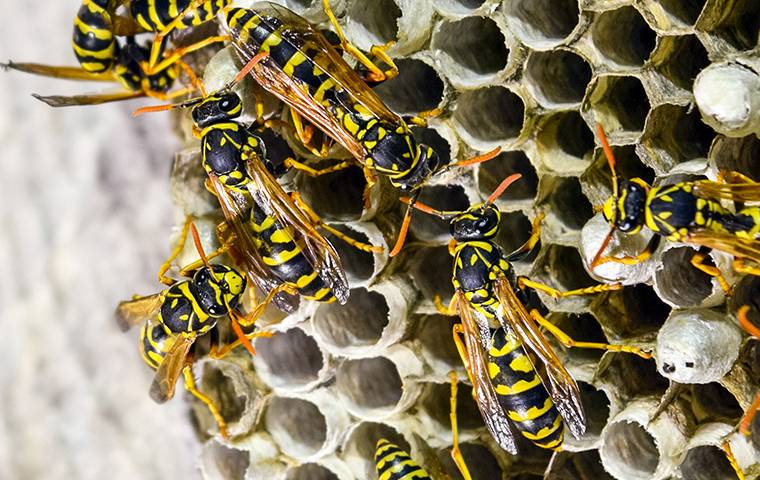
Quick answer: If wasps repeatedly fly into the same hole near a Peterborough doorway, deck or soffit, keep clear of the entrance and note its exact location. A photograph from a safe distance and a description of foot traffic nearby will help a technician decide how to inspect it. Do not block the opening or knock down an active nest.
First, locate the activity without disturbing it
Watch from a safe place for a short time. Are insects entering a gap in siding, a ground opening, a shed roof or a visible paper nest? Is the route beside a door, walkway or outdoor seating area? Note how people and pets use that space so you can avoid the entrance while arranging help. Do not stand under the nest for a close photograph, climb a ladder to reach it or put a hand into a hidden opening.
Peterborough properties range from downtown and East City lots to homes elsewhere in the city. The address alone does not establish the insect species or nest location. Share the actual signs and a photo if possible. Bees, solitary insects and social wasps call for different decisions, and some insects may be beneficial when the nest is not creating a conflict.
What information should you send with a quote request?
- Location: the nearest door or building side, approximate height and whether the nest is visible or in a wall or ground opening.
- Activity: when you first noticed repeated flights, whether activity seems to be increasing, and whether insects are inside the home.
- Access: any ladder, roof, gated yard, tenant or business access issue the technician should know.
- Exposure: whether people must pass near the entrance and whether anyone has a known severe sting allergy. If someone has symptoms of a severe allergic reaction after a sting, seek emergency medical care.
These details help explain the urgency and possible access requirements. They do not replace an inspection or guarantee that the visible opening is the entire nest.
Why identification and treatment method matter
Health Canada’s wasp guidance describes the differences among social wasps and their nests, as well as prevention and precautions. Products must be registered for the target pest and used according to their label. A nest inside a wall void or near an occupied entryway may need a different approach from an exposed nest in a low-traffic area. Ask the technician what will be treated, whether anyone needs to avoid the area afterward, and when activity should be reassessed.
For prevention after activity has ended, review openings around the structure and how food or waste is handled outdoors. Do not seal an active nest entrance just to make flights stop: insects may seek another route, including toward interior spaces. A professional can advise when any repair is appropriate.
Peterborough wasp nest questions
Is a paper nest under the eaves always a hornet nest?
No. Shape and location are clues, but a clear photograph or inspection is better than assuming the species. Avoid approaching a nest to identify it yourself.
Should I spray the entrance from a window?
Do not improvise a treatment from an occupied window or door. Incorrect products or applications can put people at risk and may miss a concealed nest. Discuss the location and access with a trained technician.
Can I seal the gap after the wasps are gone?
First confirm activity has ended and ask whether the opening serves a required vent or appliance. Repair timing and materials depend on what the opening actually is.
What if the nest is at a rental or shop?
Tell the property manager or owner and explain where customers, tenants or staff pass. Keep people away from the entrance while a treatment plan and access are arranged.
Book wasp nest help in Peterborough
Quality Affordable Pest Control can assess wasp activity and explain treatment options for Peterborough properties. Visit our Peterborough pest control page or wasp nest removal service. Call (647) 502-3950 or request a free estimate with the nest location and a safe-distance photo if available.
Leave a Reply